Beechlyn, Wallace Lane, Forton, Preston, PR3 0BB
About Beechlyn
Beechlyn is a five-bedroom detached house in Forton, Preston, Preston (PR3 0BB). It has a recorded floor area of 172 m² (around 1854 sq ft), construction records dating it to 1900-1929 and council tax band E. The latest certificate (October 2008) shows an F (score 32), near the bottom of the EPC scale. The recommended improvements would lift it to D (score 62), a 2-band jump. Main heating runs on oil. The latest certificate is from October 2008, so improvements made since then won't be reflected. Other recorded features include a conservatory, a self-contained annexe, outbuildings and attached land beyond the plot.
Held since November 2009 — that's 17 years off the open market, well above the local norm. That sale fell during the post-crash dip, which often skews comparisons against later neighbouring sales. On energy efficiency it sits in the bottom 10% of properties in this postcode — significant headroom for improvement. Today's modelled estimate of £564,000 is 24% above the 2009 sale price. On a £-per-square-foot basis, the last sale (£245/sq ft) was about 160.2% above the typical sold price in the postcode. One historical planning record sits against the property in 2014.
What this property has
Inside
- Bedrooms5
- Dining roomYes
- EnsuiteYes
- ConservatoryYes
Outside
- OutbuildingsYes
- LandYes
Everything you need to know about Beechlyn
The true value, the hidden risks and the full sale history, in one report.
Pick your report · from £14.99
One time fee only - money back guarantee
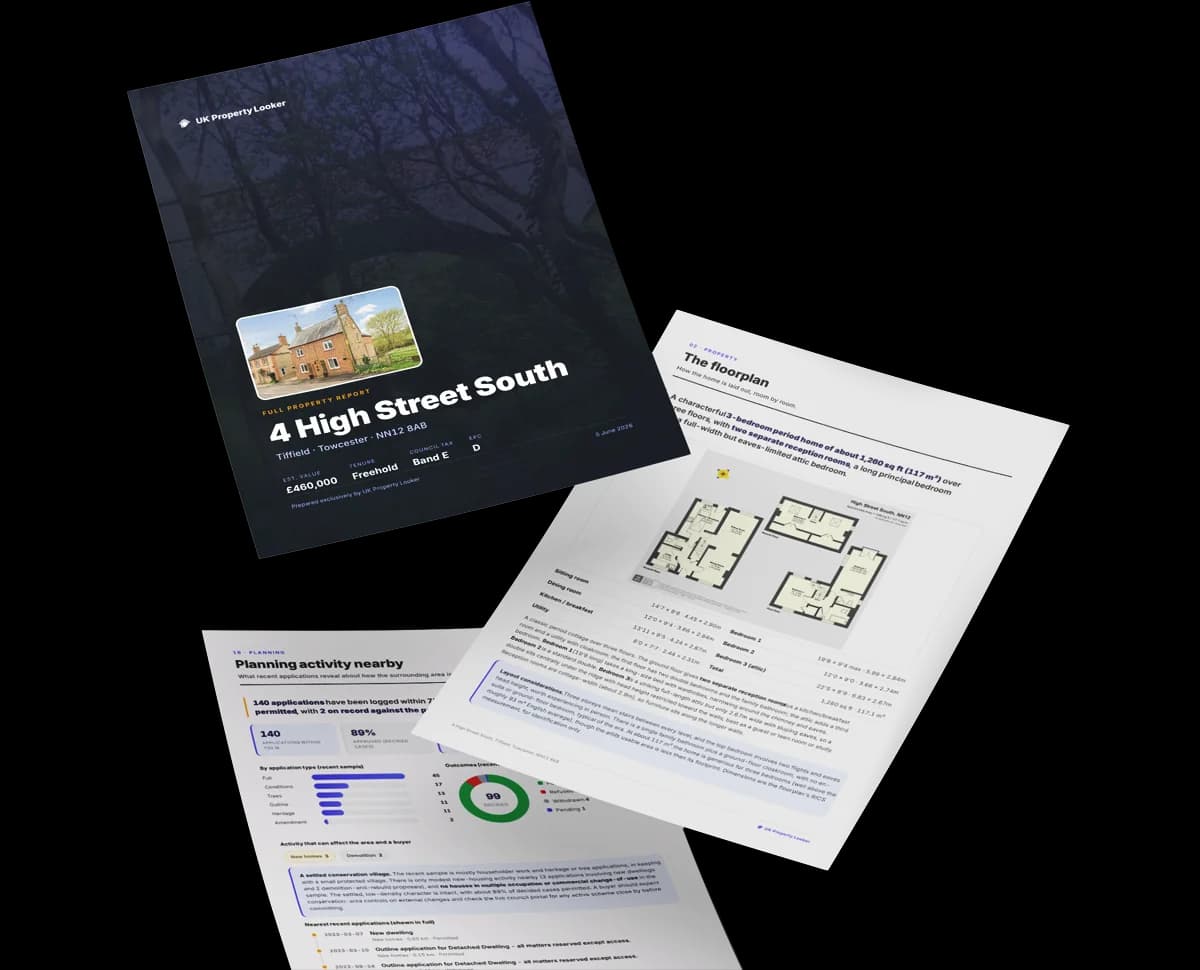
The data behind every report







Energy performance
Beechlyn sits at the bottom of the postcode for energy efficiency — meaningful headroom to improve.
EPC Expired
This certificate is over 10 years old and is no longer valid.Expired 07 Oct 2018
EPC Rating
Certificate validity
Expired on 7 October 2018

Get a survey for this property
Level 3 Building Survey
Because the property was built before 1919, has been extended more than once, and has no mains gas supply, we believe a Level 3 building survey should be considered.
From £1,085 · Includes VAT
Planning history
1 application on record at Beechlyn, Wallace Lane, Forton, Preston, PR3 0BB
- Oct 2014OutlineOutcome in report
Certificate of lawfulness for a proposed concrete garage
- Documents
- 6 docs on file
- Reference
- 14/00613/LAWP
Unlock Beechlyn, Wallace Lane, Forton, Preston, PR3 0BB's full planning history
You're seeing the shape of it. The report has the substance.
- Every decision — granted, refused or withdrawn (1 on record)
- All 1 application on this property in full, plus 12 notable nearby
- The 6 documents, officer reports & conditions
- What the pattern means for extending or converting here
One time fee only - money back guarantee
Sales history & valuation
The latest sale fell during the post-2008 dip, often a low-water mark in price comparisons.
£564,000
Modelled from EPC, postcode comparables.
£455,000
Recorded with HM Land Registry.
Sales timeline
5 November 2009Most recent
£455,000
Median price across the last 5 sales in PR3 0BB: £220,000 (2022–2021).
Nearby sales in PR3 0BB
Haywood House, Wallace Lane, Forton, Preston, PR3 0BB
Sold Jan 2022
£115,000Dove Cote, Wallace Lane, Forton, Preston, PR3 0BB
Sold Dec 2021
£520,000The Redbrick Barn, Wallace Lane, Forton, Preston, PR3 0BB
Sold Aug 2021
£220,000Kenlin House, Wallace Lane, Forton, Preston, PR3 0BB
Sold Jun 2021
£507,500Mayflower, Wallace Lane, Forton, Preston, PR3 0BB
Sold Apr 2021
£325,000
Versus other Wallace Lane homes
CO₂ Emissions for Beechlyn lags the street by a wide margin.
Price per m²
£2,642
Street avg £1,925
Floor Area
172 m²
Street avg 176 m²
Habitable Rooms
9 rooms
Street avg 6 rooms
CO₂ Emissions
14.0 t/year
Street avg 5.1 t/year
Everything you need to know about Beechlyn
The true value, the hidden risks and the full sale history, in one report.
Pick your report · from £14.99
One time fee only - money back guarantee
The data behind every report
Similar properties nearby
1 Ballot Hill Crescent, Bilsborrow
PR3 0RX
1 Admarsh Drive, Great Eccleston
PR3 0ER
1 Brockholes Avenue, Great Eccleston
PR3 0EW
1 Brockside Barn, Barn End, Badgers Wood, Bilsborrow
PR3 0GQ
1 Beacon Close, Bilsborrow
PR3 0QY
1 Blackthorn Avenue, Catterall
PR3 0NP
1 Allotment Lane, St Michaels
PR3 0TZ
1 Bowland Gardens, Forton
PR3 0BG
The neighbourhood at a glance
Crime
221/mo
Falling year-on-year across the wider district.
Nearest stop
0.2 km
Pennine Garage — bus stop.
Closest school
0.9 km
Forton Primary School. 2 schools nearby.
Go deeper on the local area
A Local Area report breaks down crime, transport links, schools and air quality in depth.
Road noise across the postcode
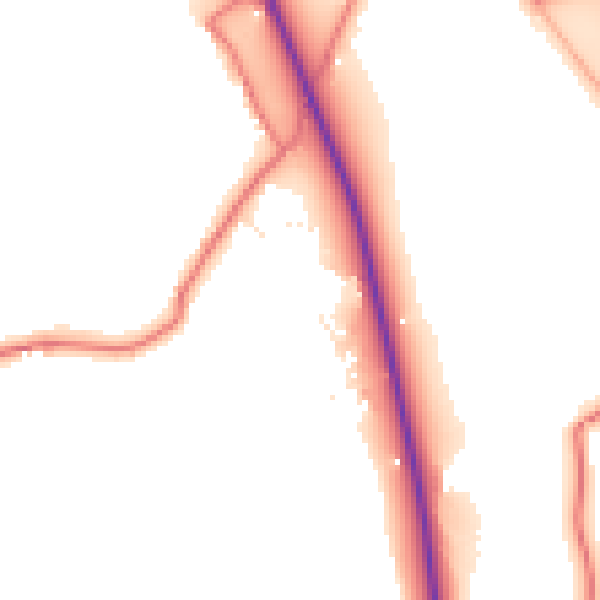
Daytime· 07:00 – 23:00
51.0dB

Night-time· 23:00 – 07:00
43.6dB