7 Troutbeck Close, Hawkshaw, Bury, BL8 4LJ
About 7 Troutbeck Close
7 Troutbeck Close is a five-bedroom detached house in Hawkshaw, Bury, Bury (BL8 4LJ). It has a recorded floor area of 185 m² (around 1996 sq ft), construction records dating it to 1967-1975 and council tax band F. The latest certificate (August 2009) shows an E (score 40), well below the UK norm with real room to improve. The recommended improvements would lift it to C (score 69), a 2-band jump. The latest certificate is from August 2009, so improvements made since then won't be reflected. Other recorded features include a conservatory. Records show the property has been extended at some point in its history.
At 185 m² it's 18.1% larger than the typical home in the postcode (157 m² median across 4 EPCs). On energy efficiency it sits in the bottom 10% of properties in this postcode — significant headroom for improvement. One planning record on file: an extension approved in 2012. Past consents include an extension, meaningful when judging how the property has evolved. Today's modelled estimate of £558,000 is 43.1% above the 2011 sale price. On a £-per-square-foot basis, the last sale (£195/sq ft) was about 19.2% below the postcode norm. On the market in October 2011 and unlisted since — roughly 15 years.
What this property has
Inside
- Bedrooms5
- Dining roomYes
- ConservatoryYes
Outside
- Private gardenYes
- GarageDouble
Building
- Previously extendedYes
Everything you need to know about 7 Troutbeck Close
The true value, the hidden risks and the full sale history, in one report.
Pick your report · from £14.99
One time fee only - money back guarantee
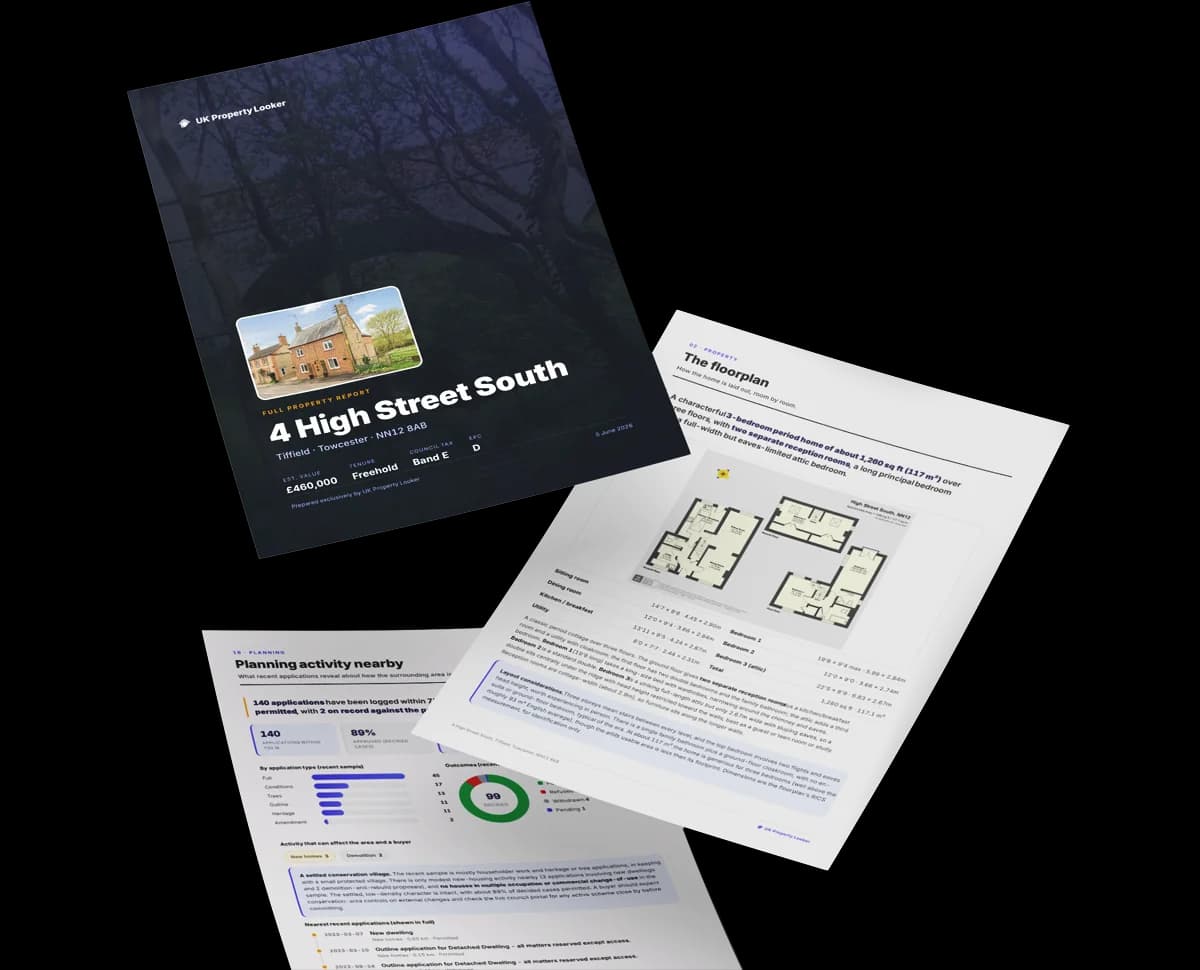
The data behind every report






Energy performance
7 Troutbeck Close sits at the bottom of the postcode for energy efficiency — meaningful headroom to improve.
EPC Expired
This certificate is over 10 years old and is no longer valid.Expired 04 Aug 2019
EPC Rating
Certificate validity
Expired on 4 August 2019

Get a survey for this property
Level 2 HomeBuyer Report
We've checked 10 risk factors against the available data for this property and believe a Level 2 HomeBuyer Report could be a suitable option for you.
From £795 · Includes VAT
Planning history
1 application on record at 7 Troutbeck Close, Hawkshaw, Bury, BL8 4LJ
- May 2012ExtensionFullOutcome in report
Terrace over existing garage with screen to front, side and rear
- Documents
- 6 docs on file
- Reference
- 55094
Unlock 7 Troutbeck Close, Hawkshaw, Bury, BL8 4LJ's full planning history
You're seeing the shape of it. The report has the substance.
- Every decision — granted, refused or withdrawn (1 on record)
- All 1 application on this property in full, plus 1 notable nearby
- The 6 documents, officer reports & conditions
- What the pattern means for extending or converting here
One time fee only - money back guarantee
Sales history & valuation
7 Troutbeck Close valuation sits well clear of the typical sold price in this postcode.
£558,000
Modelled from EPC, postcode comparables.
£390,000
Recorded with HM Land Registry.
Sales timeline
20 October 2011Most recent
£390,000
Median price across the last 5 sales in BL8 4LJ: £363,000 (2021–2007).
Nearby sales in BL8 4LJ
11 Troutbeck Close, Hawkshaw, Bury, BL8 4LJ
Sold Feb 2021
£620,0003 Troutbeck Close, Hawkshaw, Bury, BL8 4LJ
Sold Jun 2020
£440,0002 Troutbeck Close, Hawkshaw, Bury, BL8 4LJ
Sold Nov 2015
£302,5004 Troutbeck Close, Hawkshaw, Bury, BL8 4LJ
Sold May 2007
£320,0005 Troutbeck Close, Hawkshaw, Bury, BL8 4LJ
Sold Sept 1997
£140,000
Versus other Troutbeck Close homes
On price per m², 7 Troutbeck Close runs well behind the street norm.
Price per m²
£2,104
Street avg £2,944
Floor Area
185 m²
Street avg 169 m²
Habitable Rooms
9 rooms
Street avg 7 rooms
CO₂ Emissions
11.0 t/year
Street avg 7.7 t/year
Everything you need to know about 7 Troutbeck Close
The true value, the hidden risks and the full sale history, in one report.
Pick your report · from £14.99
One time fee only - money back guarantee
The data behind every report
Similar properties nearby
1 Greenmount Close, Greenmount
BL8 4HN
1 Chapel Gardens, Hollymount Lane, Greenmount
BL8 4PS
1 Chisholme Close, Greenmount
BL8 4HH
1 Greenheys Crescent, Greenmount
BL8 4QD
1 Cross Lane, Holcombe
BL8 4LY
1 Church Walk, Hollymount Lane, Greenmount
BL8 4PR
1 Brookhouse Close, Greenmount
BL8 4QN
1 Bolton Road, Hawkshaw
BL8 4HZ
The neighbourhood at a glance
Daytime road noise here sits well below conversation level — a quiet pocket of the postcode.
Crime
2/mo
Steady year-on-year across the wider district.
Nearest stop
0.1 km
Waggon & Horses — bus stop.
Closest school
0.2 km
St Mary's Church of England Primary School, Hawkshaw. 8 schools nearby.
Go deeper on the local area
A Local Area report breaks down crime, transport links, schools and air quality in depth.
Road noise across the postcode
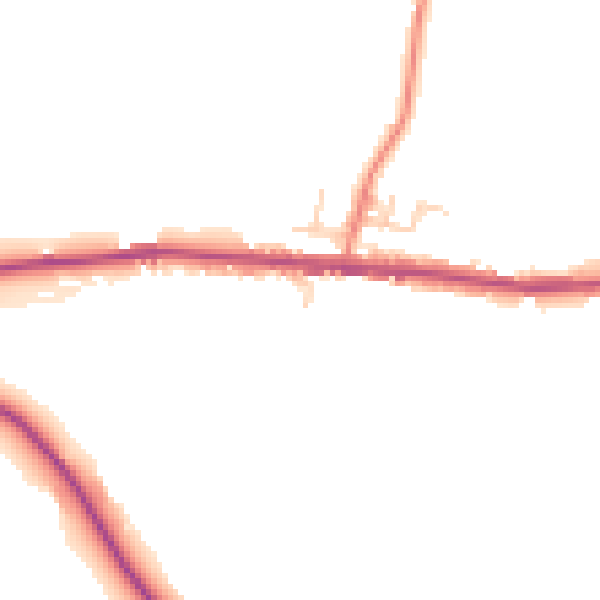
Daytime· 07:00 – 23:00
45.7dB
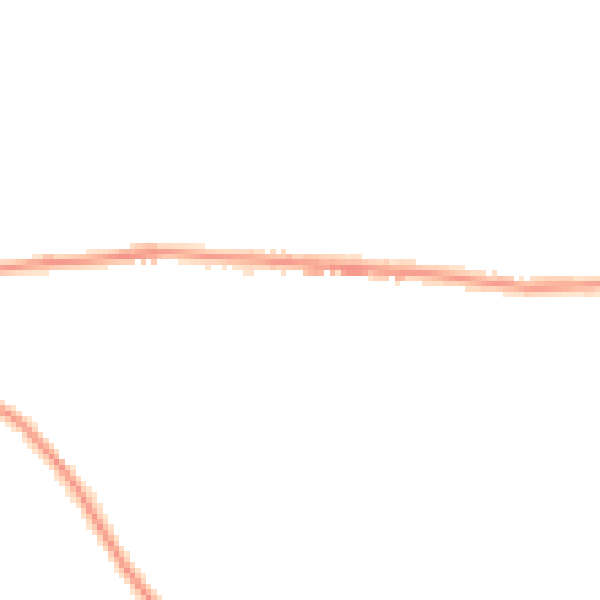
Night-time· 23:00 – 07:00
39.2dB