3 Beaconsfield Terrace, Catterall, Preston, PR3 0HE
About 3 Beaconsfield Terrace
3 Beaconsfield Terrace is a two-bedroom mid-terrace house in Catterall, Preston, Preston (PR3 0HE). It has a recorded floor area of 63 m² (around 682 sq ft), construction records dating it to before 1900 and council tax band B. The latest certificate (October 2008) shows a D (score 59), a step below the typical UK home. The recommended improvements would push it to C (score 74). The latest certificate is from October 2008, so improvements made since then won't be reflected. Other recorded features include notable views.
Untraded for 17 years, with the last transfer in April 2009. That sale fell during the post-crash dip, which often skews comparisons against later neighbouring sales. Its energy rating outperforms most of the postcode (better than 75% of similar EPCs). Across 1997–2009, sale prices on this property compounded at 8% per year. Today's modelled estimate of £160,000 is 36.8% above the 2009 sale price.
What this property has
Inside
- Bedrooms2
Outside
- Private gardenFront and rear
- Notable viewsYes
Building
- Central heatingYes
- RefurbishedYes
Everything you need to know about 3 Beaconsfield Terrace
The true value, the hidden risks and the full sale history, in one report.
Pick your report · from £14.99
One time fee only - money back guarantee
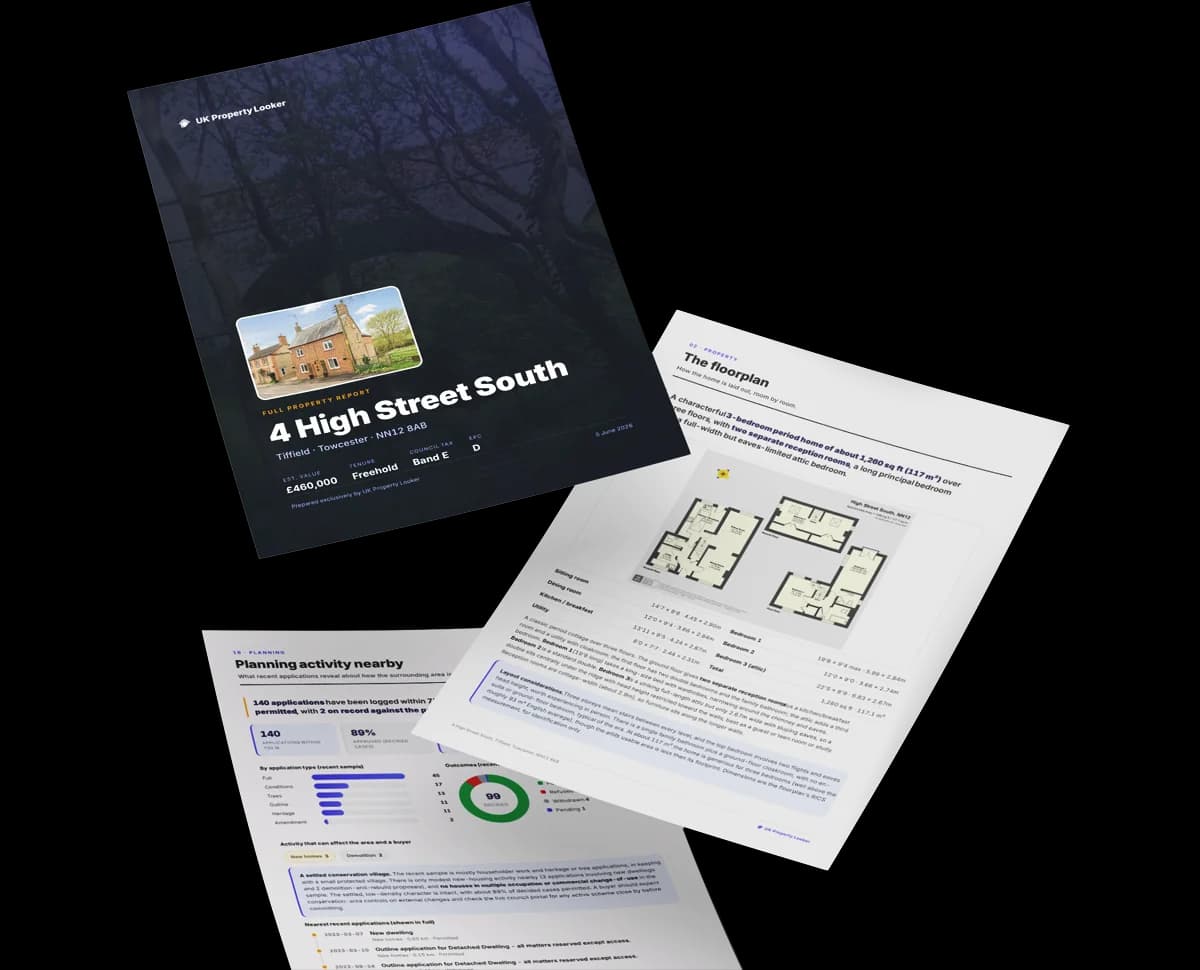
The data behind every report







Energy performance
3 Beaconsfield Terrace's EPC is over a decade old — improvements since won't be reflected.
EPC Expired
This certificate is over 10 years old and is no longer valid.Expired 21 Oct 2018
EPC Rating
Certificate validity
Expired on 21 October 2018

Get a survey for this property
Level 3 Building Survey
Because the property was built before 1919, we believe a Level 3 building survey should be considered.
From £820 · Includes VAT
Planning history
3 Beaconsfield Terrace has no planning applications on record.
But the area is active
12 notable applications nearby — larger schemes and conversions that could reshape the street. The report maps them all.
Sales history & valuation
Sale price has at least doubled since 1997.
£160,000
Modelled from EPC, postcode comparables and a sale-price growth of 8.0% per year over 12 years.
£117,000
Growth on file: 8.0% per year over 12 years.
Sales timeline
30 April 2009Most recent
£117,000
+151.6%over 12 years10 April 1997
£46,500
Median price across the last 5 sales in PR3 0HE: £109,000 (2022–2016).
Nearby sales in PR3 0HE
Versus other Beaconsfield Terrace homes
Years Held for 3 Beaconsfield Terrace runs comfortably ahead of the street norm.
Price per m²
£1,845
Street avg £1,749
Floor Area
63 m²
Street avg 69 m²
Habitable Rooms
3 rooms
Street avg 4 rooms
CO₂ Emissions
4.0 t/year
Street avg 4.1 t/year
Everything you need to know about 3 Beaconsfield Terrace
The true value, the hidden risks and the full sale history, in one report.
Pick your report · from £14.99
One time fee only - money back guarantee
The data behind every report
Similar properties nearby
1 Bridge Row, Garstang Road, St Michaels
PR3 0TJ
1 Baylton Drive, Catterall
PR3 0EA
1 Avon Close, Claughton On Brock
PR3 0EE
1 Beecham Place, Claughton On Brock
PR3 0EJ
1 Bodkin Drive, Forton
PR3 0FR
1 Beech Avenue, Bilsborrow
PR3 0RH
1 Beech Close, Claughton On Brock
PR3 0QX
1 Acreage Drive, Claughton On Brock
PR3 0FT
The neighbourhood at a glance
Crime
221/mo
Falling year-on-year across the wider district.
Nearest stop
0.1 km
Joe Lane — bus stop.
Closest school
1.3 km
Garstang Community Academy. 7 schools nearby.
Go deeper on the local area
A Local Area report breaks down crime, transport links, schools and air quality in depth.
Road noise across the postcode
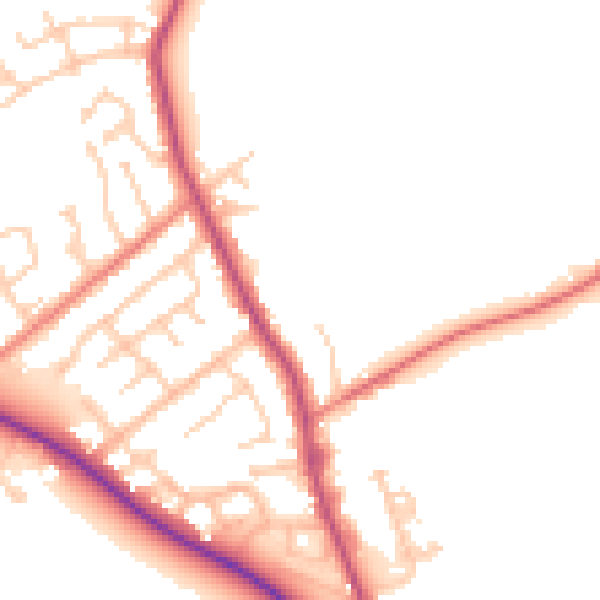
Daytime· 07:00 – 23:00
52.7dB

Night-time· 23:00 – 07:00
44.9dB